
















So you want to start a fantasy hockey league or you’ve been invited to join one. Sounds perfect for a serious puck head, but you have questions. For starters, how does fantasy hockey work?
Sure you know the basics of fantasy football. After all, when it comes to fantasy sports betting, football is the 800-pound gorilla. The structure of the NFL and the myriad statistics the sport generates make it ideal for fantasy league play.
But hockey? The league doesn’t play on specific days like the NFL. The season stretches to 82 games versus the 17 regular season games played by teams in the NFL. And the positions are not quite as clearly defined as football—a player who lines up as a defenseman in the NHL is quite different than an athlete who is a part of a team defense in the NFL.
That said, fantasy hockey is a ton of fun, especially if you’re a fan of the sport. The schedule may not be as focused and the statistics not as wide ranging, but you’re still drafting a dream team and competing to put together a better lineup than anyone else in the league. It’s your hockey knowledge on the line, and when you make smart choices you can walk away with the winnings.
What are the basics of fantasy hockey?
Like in fantasy football, you’re drafting a team from all the players in the league, and their points totals determine who wins or loses. More points translates into more fantasy hockey wins.
There are, of course, different formats across different leagues. But most will take this approach. There will be a draft and you’ll choose 16 players. Your roster will include:
Two centers
Two left wings
Two right wings
Four defensemen
Two goalies
Four bench players
Forwards and defenseman typically earn points based on goals and assists, plus/minus ratings, points scored on the power play, penalty minutes, and total shots on goal. The categories for goalies usually include goals-against average, save percentage, wins, and shutouts. Of course, not all leagues will use the same approach when it comes to tracking points but most will use a model that is similar.
Are there different league formats in fantasy hockey?
There are two basic formats used for fantasy hockey leagues.
The oldest and probably still the most common is a Rotisserie style, a season-long affair that ranks teams in each statistical category, with points awarded to the highest ranking team in each one of those categories. These points are tallied, and then used to establish the overall league standings. At the end of the NHL season, the fantasy team with the greatest number of points is the champion.
Another style is a head-to-head league, a format with increasing popularity that will be more familiar to fantasy football competitors. In this approach, teams face off against each other on every week, with wins being awarded for being the best in each statistical category. Wins and losses are recorded each week, and then a cumulative final season total is determined. Like in the NHL itself, the top teams advance to a playoff round that determines the league champion.
Drafting a successful fantasy hockey team.
Most importantly, start by carefully reviewing the rules of your league. How will points be awarded? Are any statistical categories weighted more heavily than others? Is it a rotisserie or a head-to-head league?
You’ll also want to know about the different draft styles: Standard Draft, Snake Draft, and Auction Draft. In a Standard Draft, each team owner has the same pick throughout the entire draft. In a Snake Draft, more common and more equitable, get a draft position for the first round, and then that order is reversed in each round that follows. Finally, there’s an Auction Draft, a format some leagues use to boost the size of the pot that’s up for grabs—team owners bid on players, providing the opportunity to purchase the rights to a player at any time during the draft. It’s more akin to the European professional football leagues, and their use of transfer fees.
Fantasy hockey draft strategies.
Just like in fantasy football, there are myriad approaches to take on draft day. More than anything, it’s important to enter the selection process with an overall philosophy. Here a few ideas:
- Go with a balanced attack. In this approach, team owners aim to grab the most elite players at each position. In other words, after drafting a great center, they look to capture the best player at a different position. After a few rounds, team owners take stock of their roster, and then address any weak statistical spots they identify.
- Focus completely on offense. Scoring, scoring, and more scoring is what you’re after, so you draft nothing but forwards in the early rounds. Defensemen, goalies, role players—they’re picked after the roster is filled with offense-minded players.
- Nab a couple of great goalies. Some team owners believe that two goal keepers offer high value statistically, and will use their first two picks to draft the position. The thinking, while not shared by many players, is that the list of elite goalies is small, and it’s valuable to grab the best ones before anyone else.
- Shop where the talent is scarce. Similar to the focus on goalies, team owners turn their attention to positions where options are fewer. They settle for players that may be ranked lower, but play positions without much depth. This lets a team owner fill up positions considered less important with better players, leaving others to pick from a shallow talent pool. You’ll draft a defenseman or a goalie ahead of a high-producing forward, for instance, because you’re convinced there will be another forward available later who will be nearly as productive as a player who may be considered better.
- Take the best on the board. Forget all the thinking about positions, and just take the best player available, regardless of position. For example, if the league’s best goalie has not been picked, take him. You may end up drafting centers with your first three picks and be stuck with, say, lower-tier wings, but you believe in your focus on talent over anything else.
A few final takes on fantasy hockey drafts.
Even if believe you know pro hockey inside-out, go into the draft with a list of players you consider to be the top ten in the NHL. And put a lot of thought into your first-round pick—it’s probably the most important choice you’ll make.
Work on getting a core group of players together—think of a starting NHL lineup with three forwards, two defensemen, and a goalie—and then start to fill in the rest of your roster from there. This means you should have at least a collection fo quality first-line players.
Don’t pick a goalie too early. Yes, this goes against the goalie philosophy noted earlier. But goalie performance is not as predictable as other positions—one season’s hot keeper can turn stone cold in the year that follows. In contrast, a 25-30 goal scorer is likely to turn in fairly consistent numbers year-over-year.
Understand trades and the waiver wire.
If your team is struggling, don’t be afraid to mix things up. Make a swap to land that high-scoring forward you missed out on in the draft. Sometimes a player traded in the actual NHL is a good trade in fantasy—a new environment or system might help turn their season around.
Remember that not every player in the NHL was picked in your fantasy league draft. Scour the league statistics to see if there’s a sleeper out there, and cut a poor performer to grab him before someone else does.
Play fantasy hockey and have fun.
Once you know how fantasy hockey works, the fun can get started. The great thing about fantasy hockey is that the season lasts longer than pro football, so you’ll have entertainment for months.
Draft well. Follow a general philosophy. Don’t be afraid to trade for players or cuts a player for a waiver wire replacement. Once you know how fantasy hockey works, dig into it and learn how to be successful!
Want to win big? Fantasy Guru’s will help give you the insiders edge you need to win big in your fantasy hockey league.
Related articles
The 2026 MLB Season Review
There is no telling what will happen in 2027 with baseball, but we know what happened in 2026. Here are some fascinating final numbers from the 2026 season and I hope all of you had a wonderful experience playing fantasy baseball in 2026. Now, on to the playoffs. THE DAILY SHOW Don’t forget about FREE show, Fantasy Sports…
2026 MLB Trade Deadline
It is MLB Trade deadline day. Ray Flowers has his Red Bull, some pizza and he made sure to get good night's sleep to gear up for this special day.. When a trade happens, Ray will list the deal and fire off some initial trade deadline analysis. Rumors spreading? Ray will not that too. If…
Ceiling Hunting with Elite Running Backs 2026 – Part II
Tyler Buecher examines the elite running back landscape and their potential for putting up a ceiling fantasy campaign in 2026. You need a subscription to access this content. Choose from the following: VIP Memberships – Seasonal Annual Season-long content, draft guide, rankings, podcasts, and Discord access. $109.99 VIP Memberships – VIP Monthly Includes all plans: Seasonal, Daily, and Betting, plus exclusive tools and Discord. $99.99 NFL Memberships – NFL (All-In) $499.99 Already a member? Sign in.
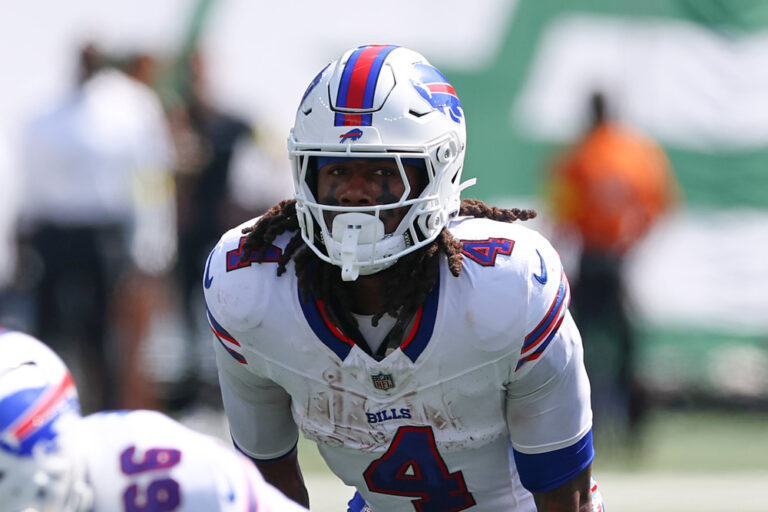
Ceiling Hunting with Elite Running Backs 2026 – Part I
Tyler Buecher examines the elite running back landscape and their potential for putting up a ceiling fantasy campaign in 2026. You need a subscription to access this content. Choose from the following: VIP Memberships – Seasonal Annual Season-long content, draft guide, rankings, podcasts, and Discord access. $109.99 VIP Memberships – VIP Monthly Includes all plans: Seasonal, Daily, and Betting, plus exclusive tools and Discord. $99.99 NFL Memberships – NFL (All-In) $499.99 Already a member? Sign in.
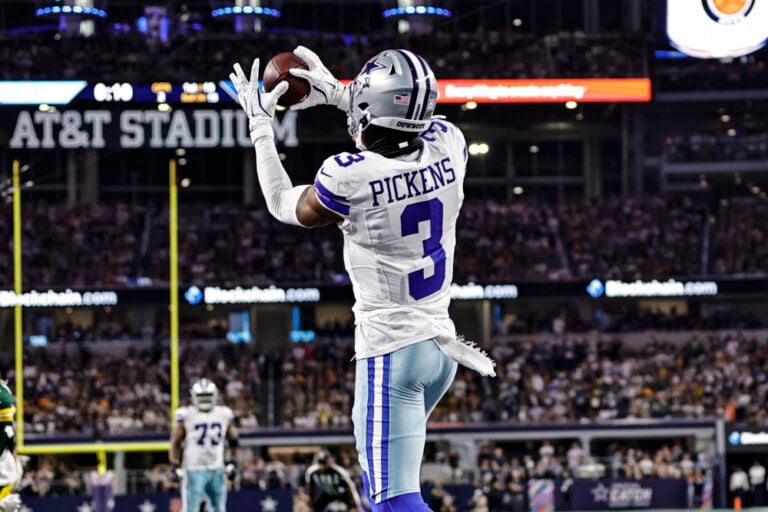
Scott Fish Bowl 16 Draft Strategy
Tyler Buecher reviews the scoring format for this year’s Scott Fish Bowl (SFB16) and how it impacts drafting strategy at each position. You need a subscription to access this content. Choose from the following: VIP Memberships – Seasonal Annual Season-long content, draft guide, rankings, podcasts, and Discord access. $109.99 VIP Memberships – VIP Monthly Includes all plans: Seasonal, Daily, and Betting, plus exclusive tools and Discord. $99.99 NFL Memberships – NFL (All-In) $499.99 Already a member? Sign in.
Tyler’s Thoughts – 2026 NFL Mock Draft
Tyler Buecher delivers his final 2026 NFL Mock Draft pairing general manager tendencies, team needs, schematic fits, and expected draft capital. You need a subscription to access this content. Choose from the following: VIP Memberships – Seasonal Annual Season-long content, draft guide, rankings, podcasts, and Discord access. $109.99 VIP Memberships – VIP Monthly Includes all plans: Seasonal, Daily, and Betting, plus exclusive tools and Discord. $99.99 NFL Memberships – NFL (All-In) $499.99 Already a member? Sign in.